Last updated: October 20, 2026
Quick answer: 1 good starter project is enough to begin. This guide to Beginner Craft Projects — The Complete Guide is written for the person who wants to make something real without turning a hobby into a second job. Beginner craft projects should be simple enough to finish in one sitting, cheap enough to abandon without regret, and forgiving enough to survive a crooked cut or a glue blob.
Key takeaways
- Start with projects that need one tool, not a full workshop.
- Pick materials that hide mistakes: felt, paper, yarn, air-dry clay, and basic wood blanks.
- Select the project by the finish line you want, not by what looks impressive on a shelf.
- Skip anything that requires wet paint, precise stitching, or power tools if you want fast wins.
- A good beginner project teaches one skill at a time: cutting, gluing, folding, wrapping, or simple assembly.
What counts as a beginner craft project?
A beginner craft project has a short materials list, few steps, and a low penalty for mistakes. A paper garland, a painted plant pot, a no-sew tote decoration, a simple bead bracelet, or an air-dry clay dish all fit that pattern because each one can be finished without specialized skill or expensive gear.
Social media can fool people here. A project may look easy on a screen and still fall apart in real life when the cuts are uneven, the glue line shows, or the paint goes on too thick. Beginner projects should hide flaws instead of exposing them. Felt is friendlier than satin. Cardstock is easier than watercolor paper. Acrylic craft paint is more forgiving than thin stain. Those material choices matter more than the final look, because they decide whether the project ends in a finished object or a drawer of abandoned supplies.
I would sort Beginner Craft Projects into three buckets: decoration, useful objects, and skill-builders. Decoration projects include paper flowers, framed collage, and painted rocks. Useful objects include coasters, keychains, and storage jars. Skill-builders teach one technique that transfers to other projects, such as wrapping yarn, folding paper, or making simple knots. Confidence is the point? Then skill-builders are a smart place to start.
The simplest projects are not always the most satisfying, so a project can be easy and still feel pointless if it has no purpose. A coaster set, notebook cover, or wall hanging usually lands better than a random trinket because the result has a job to do. That matters when someone is new and easily discouraged.
How do I choose the right first project?
Match the project to your patience, your space, and the mess you can tolerate. Someone who wants a calm half hour should not start with hot glue and glitter. Someone who wants a visible result should not start with a ten-step paper model.
The fastest way to make a decent choice is to run through four questions:
- How many tools does it need? One pair of scissors and a glue stick is ideal. Once a project adds a rotary cutter, pliers, or a heat tool, the difficulty rises fast.
- How permanent does it need to be? A paper wreath is easier than a sewn pillow because paper can be repositioned and trimmed.
- How much drying or curing time is involved? Air-dry clay, paint, and adhesives can turn a short project into a waiting game.
- How visible are the flaws? Dark felt, textured paper, and painted wood forgive more than glossy surfaces and white fabric.
That last point saves beginners a lot of frustration. A project that looks beautiful on a desk may be brutal for a first attempt if every wobble shows. Choose materials that help you. Felt does not fray much when cut. Cardstock can be scored and folded cleanly. Wooden blanks from craft stores usually arrive already shaped, which removes the hardest part of woodworking: making a clean blank from scratch.
Usually, the wrong first project piles several new skills together. Sewing, pattern reading, and stuffing in a single plush toy can be too much. So can resin, measuring, and pigment mixing. A better first project isolates one skill and gives a visible payoff; that is how a beginner keeps going.
For crafting with children, the standards shift. The right project is shorter, sturdier, and less dependent on precision. Paper masks, foam stickers, sponge painting, and bead threading are better than anything with razor-sharp cuts or tiny parts. For adults, a practical starter project is often the one that fits on a kitchen table and can be cleared away in 10 minutes.
Beginner craft projects that give the fastest wins
Fast wins usually come from projects that rely on simple assembly rather than construction. That usually means paper, yarn, felt, mason jars, or pre-cut blanks.
Paper projects
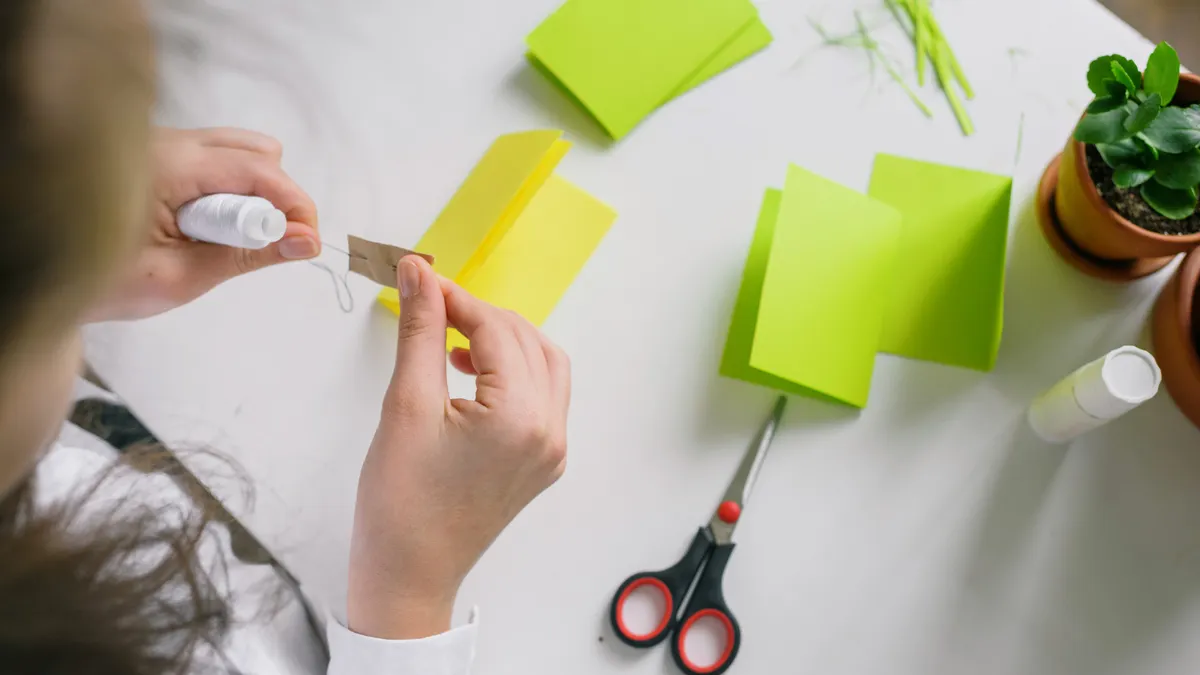
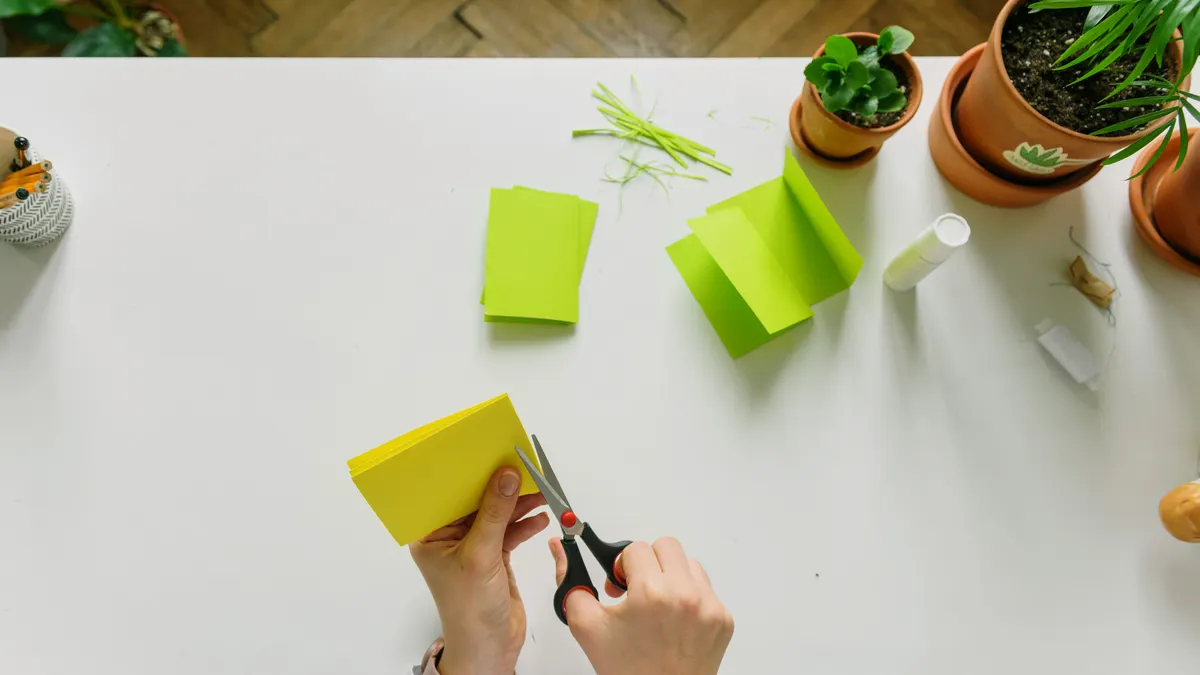
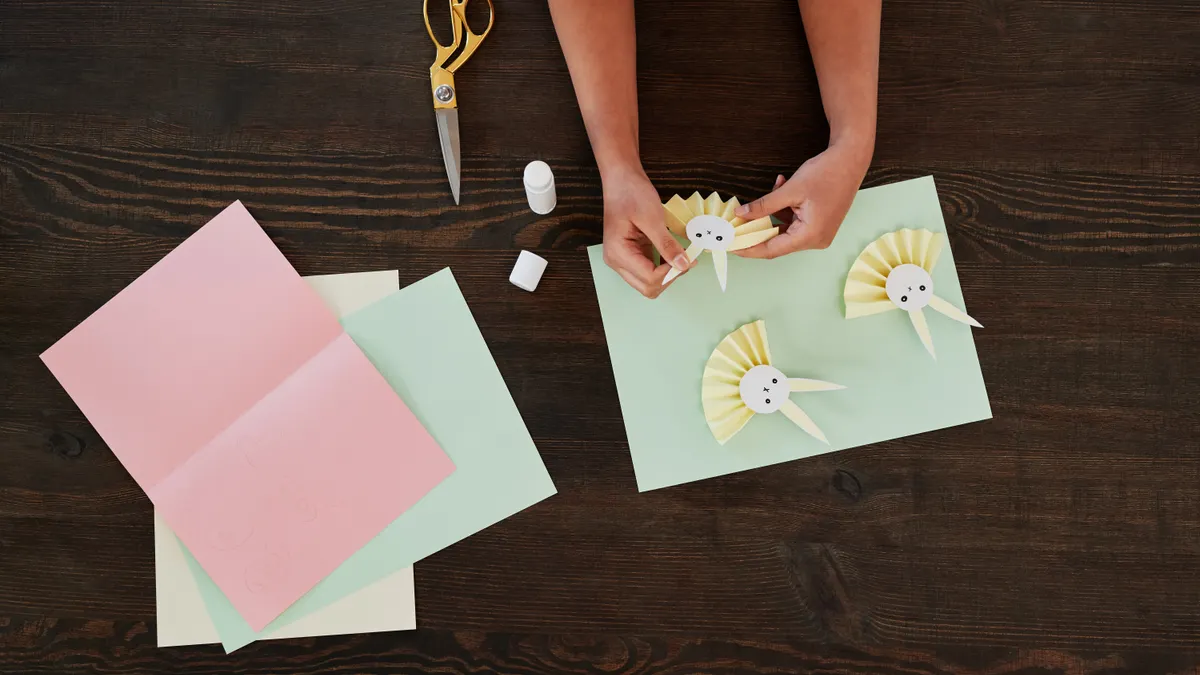
Paper is a strong starting material because it is cheap, easy to replace, and quick to clean up. Paper chains, greeting cards, folded stars, scrapbook pages, and paper flowers teach cutting, folding, and layout without a big investment. Cardstock is better than printer paper for anything that needs shape, because it holds creases and weight more reliably.
Paper projects suit people who want a finished result in under an hour. The drawback is durability. Thin paper tears, curls with humidity, and looks fragile once handled a few times. That makes paper a poor choice for anything expected to survive daily use.
Felt projects
Felt is one of the most forgiving craft fabrics. It does not fray the way woven fabric does, so edges can stay neat even with beginner cuts. Simple felt flowers, ornaments, bookmarks, and stuffed shapes are all realistic starting points. A straight stitch, blanket stitch, or fabric glue can be enough for many of them.
But felt has a weak spot: it can look childlike if the design is too simple or the color palette is too loud. It also pills with wear. Felt works best when the goal is a soft decorative object, not a long-lasting garment or bag.
Yarn projects
Yarn works well for wrapping, knotting, braiding, and simple weaving. Yarn tassels, pom-poms, friendship bracelets, and basic coasters are all beginner-friendly. These projects teach rhythm more than precision, which helps someone who freezes up around exact measurements.
Yarn can turn into spaghetti in a hurry, especially if it tangles or sheds. Thicker yarn is easier for a beginner than thin, slippery yarn. If a project needs consistent tension, it becomes harder quickly. That is why a simple wrapped letter or tassel usually beats a full macramé wall hanging for a first try.
Clay and modeling projects
Air-dry clay and oven-bake clay can produce satisfying results because the object feels substantial. Small dishes, pinch pots, beads, and trinket trays are common starter projects. These teach shaping and smoothing, not just decorating.
The trade-off is drying time and cracking risk. Too thick, and the clay can split. Handle the surface too soon, and it can dent. Clay is a good first medium only if the maker is willing to wait and tolerate a few imperfections.
Paint-and-decorate projects
Painted plant pots, rocks, frames, and jars are good for beginners who want color without construction. A plain object becomes personal quickly with one or two colors, stencils, or simple patterns like dots and stripes.
Paint projects are easy to start but just as easy to overcomplicate. Once a beginner starts layering colors, masking shapes, or chasing perfect coverage, the difficulty rises. Acrylic craft paint is the usual starter choice because it dries quickly and covers many surfaces reasonably well, but it can still show brush marks on smooth surfaces.
What materials should a beginner actually buy?
Buy only the materials that let one project finish cleanly. A beginner does not need a giant starter kit; a better kit is usually smaller and more deliberate.
The most useful basics are these:
- scissors
- glue stick or tacky craft glue
- acrylic craft paint
- paintbrushes in one small and one medium size
- cardstock
- felt sheets
- yarn in a medium weight
- a ruler
- pencil
- masking tape
- air-dry clay if a three-dimensional project is the goal
That list is enough for many first projects. It also keeps waste down. A full craft aisle is a trap for beginners because every new tool promises a new hobby. The trick is to match materials to the project, not the reverse.
If there is one material to buy carefully, it is adhesive. School glue is fine for paper. Fabric glue or tacky glue works better for felt and light embellishments. Hot glue is useful, but it can also create strings, burns, and lumpy joints that a beginner may not be ready to manage. Better to save it for simple assembly than for anything delicate.
A shallow box, zip bags, or divided tray makes it easier to restart later. Craft supplies scattered in a drawer are a quiet form of discouragement. If the setup takes too long, the project gets postponed.
For people who want authoritative safety guidance on tools and materials, the U.S. Consumer Product Safety Commission has general household and product-safety resources, and the American Academy of Pediatrics publishes child-safety advice for projects done with children. Those are useful reference points when a project involves sharp tools, heat, or small parts.
Which beginner projects are best for different goals?
The best beginner craft project depends on the finish line. Someone who wants quick relaxation should not pick the same project as someone who wants a gift or a home decoration.
For calm and low pressure, paper garlands, simple doodled cards, and yarn tassels work well. They are repetitive, easy to stop midstream, and unlikely to go badly wrong. The downside is that they may feel less substantial when finished.
For something useful, coasters, bookmarks, bookmarks with felt tabs, decorated jars, and simple trays are stronger choices. These projects are more satisfying because they get used. The downside is that useful items have to hold up under handling, so material choice matters more.
For a gift, painted mugs are not as beginner-friendly as they look, because not every paint or surface treatment is food-safe or dishwasher-safe. If the goal is a gift, consider checking the paint and finish instructions from the manufacturer and, if needed, consulting a professional about food-contact safety before using a mug as a present. A safer choice is a framed paper collage, a fabric pennant, a hand-decorated notebook, or a small clay dish. Gifts should be simple enough to finish neatly. A beginner can wreck a good idea by adding too many colors or decorations.
For learning a transferable skill, simple sewing by hand, wrapping, folding, and basic clay shaping are the best returns on time. Those skills can be reused in more complex projects later.
Here is the simplest rule: pick a project that rewards imperfection. A deliberately rustic piece can look charming. A project that depends on symmetry and machine-like edges will punish a novice.
The honest comparison: simple paper, felt, yarn, clay, and paint
Simple paper and felt are the safest starting points; clay and paint create more satisfying objects, but they ask more of the maker.
| Criteria | Paper | Felt | Winner for this condition |
|---|---|---|---|
| Speed to finish | Usually fastest; many projects can be done in 20–45 minutes | Still quick, but cutting and assembly often take longer | Paper for instant gratification |
| Forgiveness of mistakes | Good, but creases and tears show | Excellent; edges hide small errors better | Felt for beginners who cut unevenly |
| Cost to start | Very low; a pack of cardstock covers many projects | Low to moderate depending on sheet size and color variety | Paper for the smallest starter budget |
| Durability | Low; sensitive to moisture and bending | Moderate; soft, but holds up better than paper in regular handling | Felt for objects that will be touched |
| Tool needs | Scissors, glue, pencil | Scissors, needle or glue | Paper for the fewest tools |
| Best for gifts | Cards, collages, framed art | Ornaments, bookmarks, small soft decor | Felt for keepsakes |
| Cleanup | Very easy | Very easy | Both |
| Risk of frustration | Low, unless exact symmetry matters | Low to moderate, especially with hand sewing | Paper for pure simplicity |
Paper wins when speed and budget matter most. Felt wins when the finished object needs to feel soft, look polished, or survive more handling. Yarn sits in the middle: excellent for repetitive motion and texture, but more likely to tangle. Clay produces the most satisfying tactile result, but it is the least forgiving of rushed hands. Paint is the easiest way to personalize an object you already have, yet it can make a clean project look messy if coverage is uneven.
A generic article would stop at “all of these are beginner-friendly.” That is not useful enough. The real choice is about friction. Paper creates the least friction. Felt hides the most mistakes. Clay creates the most consequence if you rush. Paint offers the biggest visual change for the least structural skill, but only if the base object is already good.
If someone wants one recommendation, I would start with felt for most adults and paper for children or the impatient. Felt gives a better balance of finish quality and error tolerance. Paper is still the easiest on-ramp when attention span is short.
What beginner craft projects should I avoid?
Avoid any project that requires several new skills at once, especially when one mistake ruins the whole thing. That includes resin casting, elaborate sewing patterns, furniture refinishing, embroidery with tiny stitches, and anything involving power tools or open heat unless there is prior guidance.
The most common beginner mistake is choosing a project for the photo rather than the process. A resin tray can look gorgeous online and still be a bad first project because mixing ratio, dust control, and curing time all matter. A sewn tote bag can seem simple until seam allowance, turning corners, and topstitching all arrive at once. A wood project can become expensive quickly when sanding, cutting, drilling, and finishing are all unfamiliar.
Projects also become poor choices when the cleanup is harder than the craft. Glitter, spray adhesive, and pigment-heavy materials can turn a pleasant hour into a mess that lingers for days. That does not mean those materials are banned forever. It means they are not smart first steps.
There is also a social trap. A beginner who feels judged may pick an advanced project to look capable. That is backward. A project is beginner-friendly if it gives a clean result with limited skill, not if it impresses other people while staying half-finished in a corner.
If the materials list mentions a curing time of 24 hours, exact temperature control, or precision cutting, the project is probably not a starter project unless the maker already likes that sort of discipline.
What should a first craft session look like?
A first craft session should be short, prepared, and easy to stop after one success. Thirty to 60 minutes is enough for a starter project, with another small block of time for cleanup.
The best setup is simple:
- clear a table
- gather every supply before starting
- keep a trash bowl or bag nearby
- use a cutting mat or newspaper if needed
- set a timer if the craft tends to sprawl
- stop when the core object is finished, even if extra decoration is tempting
That last point matters. Beginners often ruin a perfectly good project by trying to make it more impressive. A basic paper star that is done is better than a complicated version that never gets assembled. The goal is to finish, not to squeeze in every idea at once.
A first session should also include one small skill goal. For example: make three clean folds, glue one straight seam, or paint one even base coat. That kind of target builds confidence without requiring mastery.
The session should end with a visible object. A half-built project tucked into a bag can feel like failure. A completed coaster, card, or ornament feels like progress. That emotional difference is the whole point of beginner crafting.
The verdict: which beginner craft project should come first?
Pick paper projects if the goal is speed, low cost, and the least possible setup. Pick felt projects if the goal is a more finished-looking object that tolerates crooked cuts and small mistakes. Pick yarn if repetitive motion is calming and the maker wants texture more than structure. Pick clay if a tangible object matters more than a fast finish. Pick paint if there is already a base object ready to personalize.
Pick paper if this is for a child, a tight budget, or a first attempt with almost no tools. Pick felt if the maker wants the best balance of beginner-friendly handling and respectable results. Neither if the project requires precision, advanced tools, or a perfect finish on the first try.
The best first craft is the one that will actually get finished. That usually means the simplest project, not the most ambitious one. A beginner who finishes one paper or felt project has a real starting point. A beginner who buys twelve supplies for a glamorous project often has only a pile of intentions.
Where to go after the first project
After one successful beginner project, the next step is to repeat the same technique with a small twist. That is how skill grows without turning the hobby into a test.
A second project should change only one variable:
- same paper, new shape
- same felt, new stitch
- same yarn, new pattern
- same clay, new form
- same paint, new surface
That keeps the learning curve gentle. It also shows which part of crafting is actually enjoyable. Some people like cutting. Others like decorating. Some prefer assembling objects that already have a shape. The first project is often less about the object than about discovering the right kind of making.
Beginner crafting works best when it is treated as a sequence of small wins. One finished item teaches more than ten half-finished ideas. The goal is not to become advanced quickly. The goal is to make the next project easier than the last one.
FAQ
What is the easiest beginner craft project?
Paper crafts are often the easiest because they need few tools and little cleanup. A greeting card, folded star, or paper chain can usually be finished in under an hour.
What is the best beginner craft project for adults?
A felt project or a simple decorated object, like a jar or coaster, is often a good adult starter project. The best choice is usually the one that fits your space, your patience, and the time you have.
Are beginner craft projects expensive?
They do not have to be. Many beginner craft projects can start with scissors, glue, cardstock, and felt sheets. The table in this guide shows paper as the lowest-cost option.
What beginner craft project is best for gifts?
A framed paper collage, hand-decorated notebook, or small clay dish is often a safer gift choice than a mug. If you use paint or a finish on a mug, check the product instructions and consult a professional if food-contact safety matters.
How long should a first craft project take?
About 30 to 60 minutes is a good target for a first session. That leaves enough time to finish without making the project feel like homework.
Drafted with AI; not yet reviewed by a person.
Leave a Reply